ServicesExams & Cleanings
Kids' Exams & Cleanings in Southborough
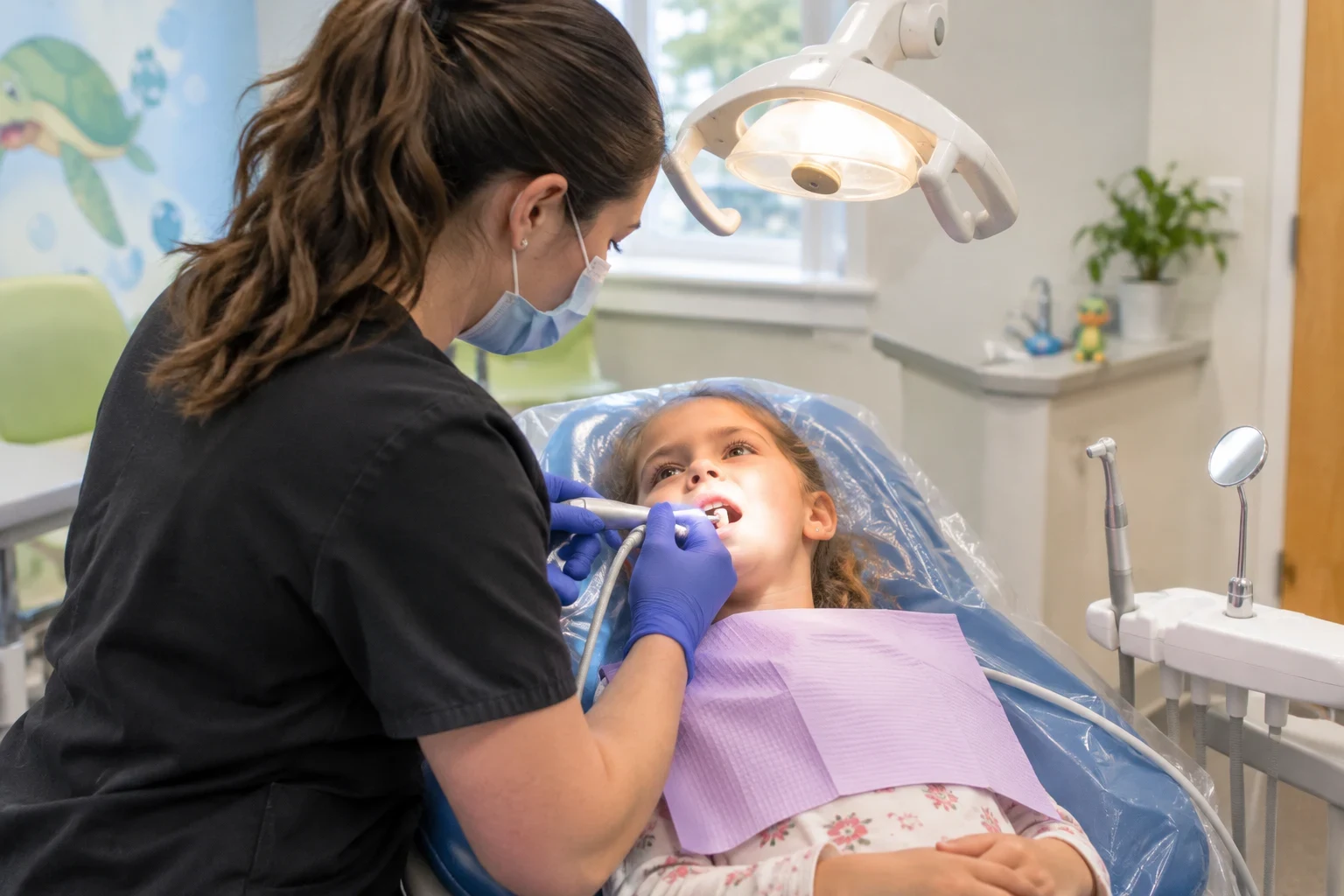
We check every tooth, clean off the plaque your child's toothbrush misses, and tell you what we found in plain words. Small problems get small fixes. If something needs more, we show you why before anything is scheduled.
A checkup that catches small things while they're small
An exam and cleaning is the visit most kids should have about twice a year. We look at teeth, gums and bite, clean off plaque and hardened tartar, and watch for early decay. Nothing about it should hurt.
We'd rather deal with a problem while it's a soft spot than a hole. A chalky white patch on a molar can often be turned around with fluoride and better brushing. A small cavity can get a small filling. When decay has gone deeper, we show you what we see and explain why a bigger fix, like a pediatric crown, makes more sense this time.
We see kids from Southborough as well as Framingham, Westborough and other towns close by. Every child gets the same calm pace, and we tell them what each step is before we start it.
What happens at an exam and cleaning
- Tooth-by-tooth exam
- We check each tooth for soft spots, stains and early cavities. We also look at gums, tongue and cheeks, how the bite lines up, and how new teeth are coming in.
- Gentle cleaning
- We scrape off tartar, polish the teeth and floss between them. Kids get to see and touch the tools first, so the polisher is just a buzzy toothbrush instead of a surprise.
- X-rays only when they're due
- Cavities between back teeth often can't be seen without an X-ray. We decide based on your child's age, cavity risk and when the last ones were taken, not on a fixed schedule.
- Fluoride varnish
- A thin coat is painted on after the cleaning. It sets in seconds and helps harden spots that are starting to weaken. Our fluoride treatment page covers it in more detail.
- A plain report for parents
- Before you leave, we tell you what looks good, what we want to watch, and what needs attention now. If we suggest treatment, we explain the smallest fix that will work and why.
Signs it's time to book a checkup
It's been six months or more
Plaque turns to tartar that a toothbrush can't remove. Regular visits keep it from building up along the gumline.
No first visit yet
A first visit is best by the first birthday or within six months of the first tooth. Starting early lets kids get used to the chair before anything needs fixing.
White or brown spots
Chalky white lines near the gums are often the first sign of decay. Caught early, they can sometimes be reversed without a drill.
Bleeding gums when brushing
Pink on the toothbrush or in the spit usually points to plaque sitting along the gumline. A cleaning plus a few brushing tips tends to settle it down.
Flinching at cold or sugary foods
A child who pulls back from a frozen treat or a sweet drink may have thin or softened enamel somewhere. Having us check it now is easier than waiting for a real ache.
Two rows of teeth
Sometimes an adult tooth comes in behind a baby tooth that hasn't let go. We check whether it will loosen on its own or needs help.
How the visit goes
- 1
Set it up by phone
Call us to book. For new patients, we take your child's health history and insurance details over the phone so the visit itself is shorter.
- 2
Settle in
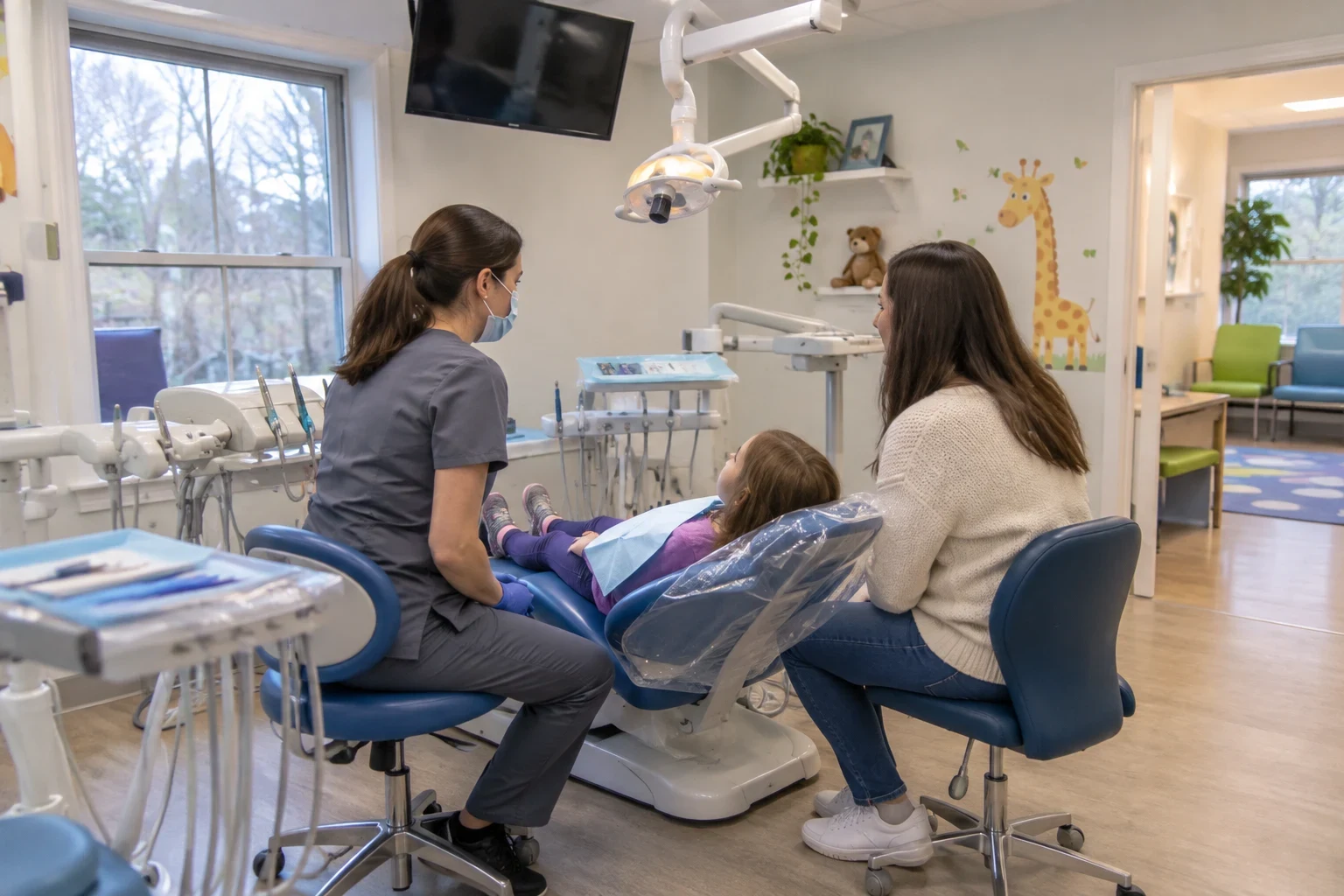
We say hello and let your child look around. Babies and toddlers often sit on a parent's lap, knee to knee with the dentist, so they can see you the whole time.
- 3
Exam and cleaning
We count teeth, clean, polish, floss and paint on fluoride if it's needed. We go slowly and take breaks when a child needs one.
- 4
Talk it through
We go over what we found with you, show you any trouble spots, and answer questions. If anything needs treatment, we explain the options and book it as a separate visit.
What affects the cost of a checkup
Most insurance plans cover routine checkups and cleanings, often twice a year. What you pay depends on your plan and what your child needs that day. For payment, we take MasterCard, Visa and Discover, most insurance plans, and the CareCredit Patient Payment Plan.
- Your insurance plan
- Plans differ on how many cleanings, X-rays and fluoride treatments they cover each year. When you call, we can tell you what we expect your plan to handle.
- Whether X-rays are due
- A visit with X-rays costs more than one without. We only take them when there's a reason to.
- Extra preventive steps
- Adding fluoride varnish or sealants to the visit changes the total. We tell you before we do them.
- Anything we find
- Fillings or other treatment are not part of the checkup. We explain what's needed and what it involves first, so nothing lands on a bill you didn't expect.
Questions parents ask about checkups
Something not covered here? (508) 466-6025
When should my child have their first dental visit?
Aim for the first birthday, or roughly six months after the first tooth shows up. The visit is short and mostly about getting used to us. We also show you how to brush tiny teeth and what to keep an eye on.
How often does my child need a cleaning?
Most kids do well with a visit every six months. Children who get cavities easily, wear braces or have trouble brushing may need to come more often. We'll tell you what makes sense for your child.
My child is nervous. What do you do?
We explain each step, let your child see and touch the tools, and go at their pace. Breaks are fine. Most nervous kids relax once they see nothing hurts. For children who need more help later with treatment, we can talk about sedation dentistry.
Do cavities in baby teeth really need fixing?
Usually, yes. Back baby molars can stay until age 10 to 12, and they hold space for adult teeth. A small cavity gets a small filling. If a tooth is already loose and close to falling out, watching it is sometimes the better call, and we'll tell you so.
Are parents allowed in the room for the checkup?
Of course. You can sit right beside your child from start to finish. Little ones in particular tend to stay calmer when mom or dad is within reach.
Will my child get X-rays every time?
No. We take them based on age, cavity risk and how long it's been since the last set. Plenty of visits don't need any.
Get your child's next checkup on the calendar
A regular cleaning is the easiest way to keep fixes small. New patients can register over the phone, and we'll find a time that works for your family.