ServicesFluoride Treatment
Children's Fluoride Treatment in Southborough, MA
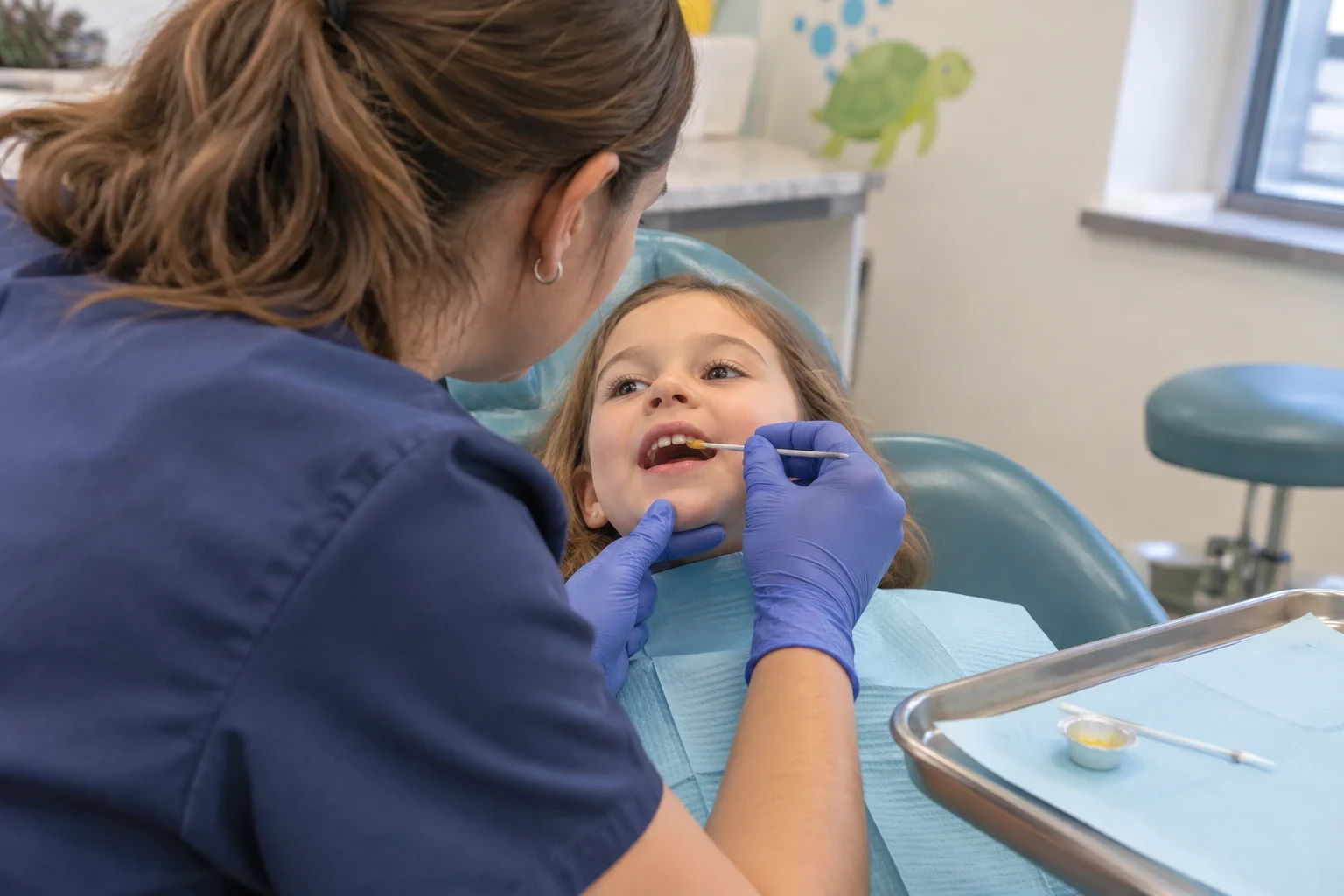
We paint a thin fluoride coat on your child's teeth in a minute or two, and most kids barely notice it. It makes enamel tougher against sugar and acid. When we catch a soft spot early, fluoride can help it firm up so it never needs a filling.
A small step that can save a filling
Kids' enamel is thinner than adult enamel, and new teeth are softest in the first couple of years after they come in. Fluoride soaks into the outer layer and makes it harder for acid to pull minerals out. It also helps put minerals back into spots that have just started to weaken.
That second part matters to us. A chalky white patch near the gumline is often the very first stage of decay. At that stage the tooth has not broken down yet, so we would rather strengthen it and watch it than reach for the drill. If a spot has already turned into a hole, fluoride will not close it, and we will tell you plainly that a filling is the better fix.
Most kids get fluoride at their regular checkup, right after the cleaning. It fits easily into a visit for exams and cleanings and adds almost no time.
What a fluoride visit includes
- A look at the enamel first
- We check each tooth for white spots, soft areas and plaque buildup before anything goes on. That tells us where fluoride will do the most good.
- Varnish, not trays
- We use a sticky varnish brushed right onto the teeth. There is no foam tray to hold in the mouth, so it works well for babies, toddlers and kids who gag easily.
- The right amount for your child's age
- A tiny dose covers the whole mouth. We use only what the teeth need, and most of it stays on the enamel rather than being swallowed.
- Spot checks over time
- If we see early weak areas, we note where they are and compare them at the next visit. You will know if they are firming up or if they need more.
- Simple aftercare notes for parents
- Before you leave, we go over what your child can eat and when to brush again.
When your child may need more fluoride
Chalky white spots
Flat, dull white areas along the gumline, often on the front teeth, can mean the enamel is losing minerals. Fluoride does its best work at exactly this stage.
Cavities in the past year
Kids who have had one cavity tend to get more. Fluoride on a regular schedule helps cut down that risk.
Lots of sipping
Juice, milk or sports drinks sipped through the day keep teeth bathed in sugar. Bedtime bottles and sippy cups are common culprits for little ones.
Brushing is a struggle
Some kids fight the toothbrush, and some have a hard time brushing well on their own. Fluoride gives their enamel a backup.
Well water
Private wells usually do not have added fluoride. If your family drinks well water, let us know so we can plan for it.
Sensitive teeth
Twinges from cold drinks can point to thin or worn enamel. Fluoride can help calm that down.
What affects the cost of fluoride
Fluoride is usually a small part of a dental bill. The price mostly comes down to your coverage and how often your child needs it. We walk you through the costs before we begin, so the bill matches what you expected.
Your insurance plan
Lots of plans pay for fluoride for kids, though some cap how many times a year or stop covering it past a certain age. We take most insurance plans and can help you find out what yours covers.
How often your child gets it
Most kids have it done at every checkup. A child at higher risk for cavities may need extra visits for a while, and that adds to the total.
The rest of the visit
A fluoride coat alone costs less than a full appointment with an exam, cleaning and X-rays. Your total depends on what your child is due for that day.
Ways to pay
Along with most insurance plans, we take Visa, MasterCard and Discover cards. CareCredit Patient Payment Plan is also an option for families who want it.
How the treatment goes
- 1
Clean and dry
We clean the teeth, usually as part of the checkup, and dry them with a little air or gauze so the varnish sticks.
- 2
Paint it on
We brush the varnish over each tooth. It sets as soon as it meets saliva. The whole thing takes a minute or two, and your child can sit in your lap if that helps.
- 3
Talk it over
We show you any spots we are watching and explain whether fluoride alone should be enough or whether something like sealants or a filling makes more sense.
- 4
Go easy the rest of the day
The teeth may look a little yellow or feel fuzzy for a few hours. Stick to soft foods and cool drinks, and skip brushing until the next morning so the varnish has time to work.
Fluoride questions parents ask
Is fluoride varnish safe for babies and toddlers?
Yes. We use a very small amount, and it clings to the teeth rather than collecting in the mouth. That is the reason we choose varnish for little ones. Your child can start getting it once the first teeth show up.
How often does my child need it?
For most kids, once at each regular checkup is enough. If we spot early white patches or your child has had recent cavities, we may suggest it more often for a stretch. We will explain why, and we will scale back once it is not needed.
Can fluoride fix a cavity?
It can help a weak spot harden back up if we catch it early, before the enamel breaks. It cannot close a hole that is already there. If we find true decay, we will lay out your choices, and most of the time that means a filling.
Why are my child's teeth yellow after the treatment?
Certain varnishes leave a faint tint on the enamel. It is only on the surface. A normal brushing the following morning clears it away, and the teeth go back to their usual color.
Do we still need fluoride if my child gets sealants?
Usually, yes. Sealants cover the deep grooves on the chewing surfaces of the back teeth. Fluoride guards the smooth sides and the tight spaces between teeth, which sealants cannot reach.
Ready to add fluoride to your child's next visit?
Give us a ring and we will set up a checkup with fluoride. New to our practice? We can get your family registered on the same call.