ServicesSealants
Dental Sealants for Kids in Southborough
Back teeth have deep grooves that a toothbrush can't fully reach. A sealant is a thin coating we paint over those grooves so food and germs can't settle in. It takes a few minutes per tooth, with no shots and no drilling.
What a Sealant Does
Most cavities in kids start in the pits and grooves on top of the molars. Those grooves can be narrower than a single toothbrush bristle. Food packs in, germs follow, and the enamel starts to soften.
A sealant fills and covers those grooves with a thin, tooth-colored resin. The surface becomes smooth and easy to brush. It's a small step now that can save your child a filling later.
We'd always rather protect a healthy tooth than fix a damaged one. If we find a groove that has already turned into a real cavity, we'll tell you plainly and talk about a filling instead. Sealing over true decay doesn't help anyone.
What's Included in Your Child's Sealant Visit
A close look at each groove
We check every tooth we plan to seal. We look for stains, soft spots and early decay before anything gets painted on.
Cleaning and prep
The tooth is polished and kept dry. A mild conditioning gel goes on for a short time so the sealant can grip the enamel, then it's rinsed off.
The sealant itself
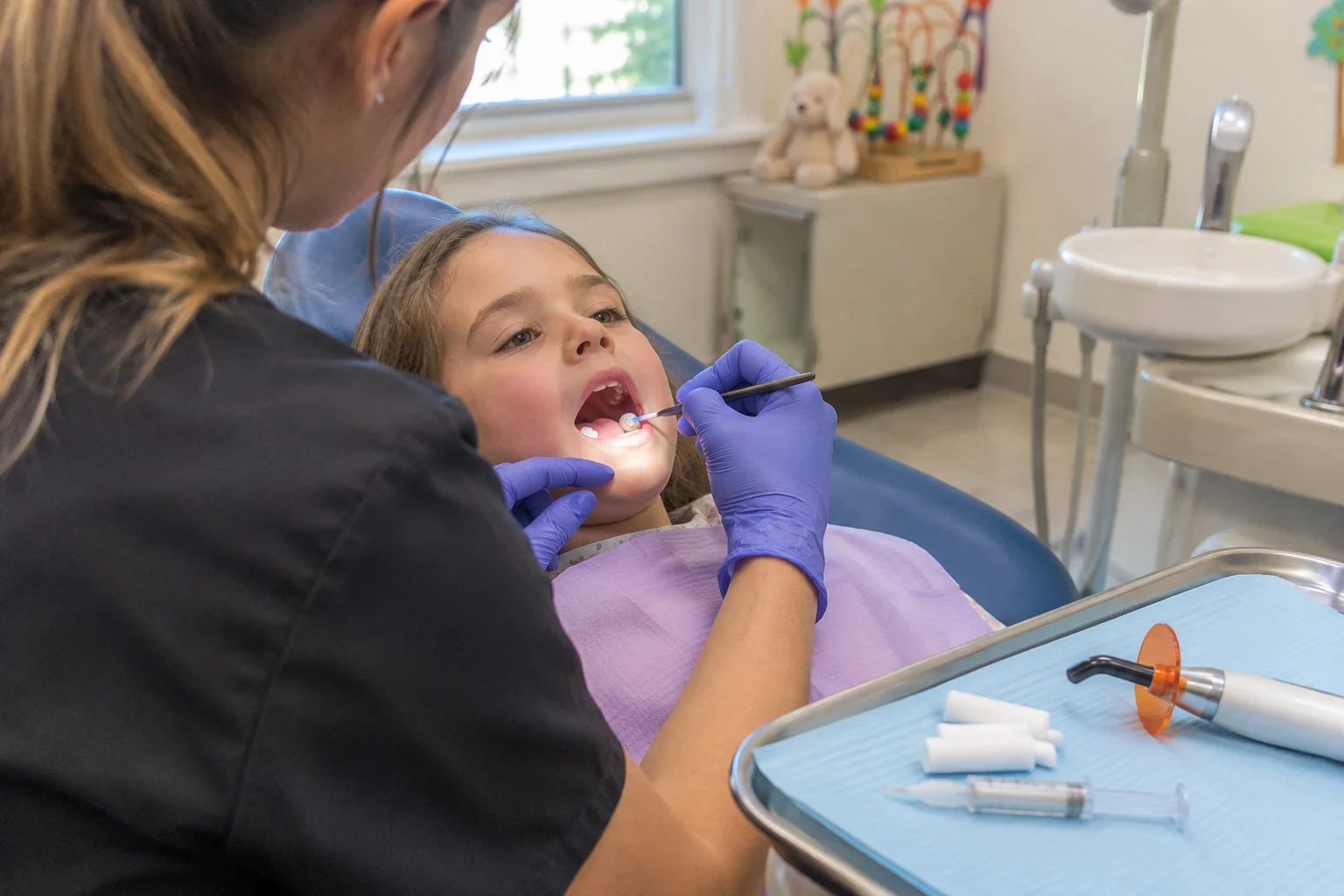
We brush the liquid resin into the grooves and harden it with a small blue light. It sets in seconds.
A bite check
We have your child bite down and make sure nothing feels high or rough. Kids can eat and drink right after.
Checks at future visits
At each regular exam and cleaning we look at the sealants. If one has worn or chipped, we can patch or redo it rather than start over on the tooth.
Signs Your Child Is Ready for Sealants
First molars just came in
The first permanent molars usually show up around age 6, behind the baby teeth. That's the best time to seal them, before decay has a chance.
Second molars around age 12
A second set of permanent molars comes in near the start of the teen years. They get the same protection.
Deep or stained grooves
Some kids simply have deeper grooves than others. If we see dark lines or sticky spots on an exam, a sealant is often a good call.
Cavities in the past
A child who has had fillings in baby teeth is more likely to get cavities in adult teeth. Sealing early lowers the odds.
Hard-to-brush back teeth
Braces, a strong gag reflex or a busy morning routine all make the back teeth easy to miss. A smooth surface is more forgiving.
An old sealant is chipped
If your child says a tooth feels rough, or we spot a gap at a checkup, it may be time to touch up the coating.
How the Appointment Goes
- 1
Settle in
Your child sits in the chair and we explain each step in kid terms. Parents are welcome to stay close.
- 2
Check and clean
We look over the teeth, then polish and dry the ones getting sealed. Cotton or a small cheek holder keeps them dry.
- 3
Paint and light
We condition the enamel, rinse, paint on the sealant and harden it with the blue light. Each tooth takes only a few minutes.
- 4
Bite and go
We check the bite and smooth any high spot. Your child can head back to school or practice the same day with no numbness to wait out.
What Affects the Cost of Sealants
Sealants are one of the simpler things we do, and the price is mostly set tooth by tooth. Before we start, we'll walk you through which teeth need them and what your plan will likely pay for. For payment, we take MasterCard, Visa and Discover cards, work with most insurance plans, and offer the CareCredit Patient Payment Plan.
- How many teeth get sealed
- One child may need two molars done, while another needs eight. That count moves the price more than anything else.
- What your plan covers
- Plenty of plans pay for sealants on a child's permanent molars, but the age cutoffs and rules vary. We'll go over your benefits with you on the phone or when you come in.
- A small soft spot first
- Sometimes a groove has a tiny spot that needs a light cleanup before we seal it. That takes a bit more time. If it turns out to be a real cavity, we'll talk with you about a filling instead.
- Same visit as a cleaning
- Booking sealants alongside an exam and cleaning means one trip instead of two. It can also make the insurance side simpler.
- Patching instead of redoing
- Fixing a worn spot on a sealant usually costs less than placing a whole new one. That's why we look at them every time your child comes in.
Questions Parents Ask About Sealants
Something not covered here? (508) 466-6025
Does getting a sealant hurt?
No. There's no shot and no drilling. Most kids say the hardest part is holding their mouth open, plus the sour taste of the conditioning gel, which we rinse off right away.
How long do sealants last?
A sealant can stay on for years, and plenty of them make it through the childhood stretch when cavities are most likely. Crunching ice or hard candy wears them faster. We look at them at each exam and patch any that have worn.
Can baby teeth get sealants?
Sometimes. If a baby molar has very deep grooves, or your child keeps getting cavities, sealing it can be worth doing. We'll give you a straight answer on whether it makes sense for your child.
What if the tooth already has a cavity?
A sealant can't fix decay. Very early changes can sometimes be sealed and watched closely. If there's a true cavity, we'll recommend a filling and explain our reasons before any work starts.
Does my child still need to brush and use fluoride?
Yes. A sealant only covers the chewing surface on top. The sides of each tooth and the gaps between teeth still need brushing, flossing and fluoride. You can read more about that on our Fluoride Treatment page.
Are sealants safe?
Dentists have been sealing kids' teeth for decades. Some parents ask about BPA, and the amount involved is very small. Ask us at the visit and we'll show you the material we use and answer your questions.
Protect Those New Molars
If your child's back teeth have come in, now is a good time to seal them. Give us a ring and we'll find a time that fits your family's week. New patients can register on the same call.