ServicesSedation Dentistry
Sedation Dentistry for Kids in Southborough
Some kids can't sit still for dental work, and that's normal. We use the lightest sedation that lets your child stay calm and comfortable, so we can fix teeth properly instead of pulling them. We'll tell you if your child doesn't need it.
When sedation makes sense
Sedation is a tool, not a default. Most kids do fine with a gentle approach, a numbing gel, and a dentist who explains each step in kid words. Some don't. A toddler with several cavities, a child with a strong gag reflex, or a teen with real fear may need help to get through the visit safely.
Our first goal is always to save the tooth. A small cavity can often be filled in a few minutes with no sedation at all. When a child needs more work, like several fillings or a pediatric crown, sedation can let us finish the repair in one visit. Without it, the work might get split across many stressful appointments or put off until the tooth has to come out.
If we think a tooth is too far gone to save, we'll say so and explain why. Then we talk through whether sedation helps for that visit too.
What sedation care includes
- A review of your child's health
- First, we go over medical history, current medicines, allergies, and breathing issues like snoring or enlarged tonsils. This tells us which options are safe and which are not.
- Matching the level to the job
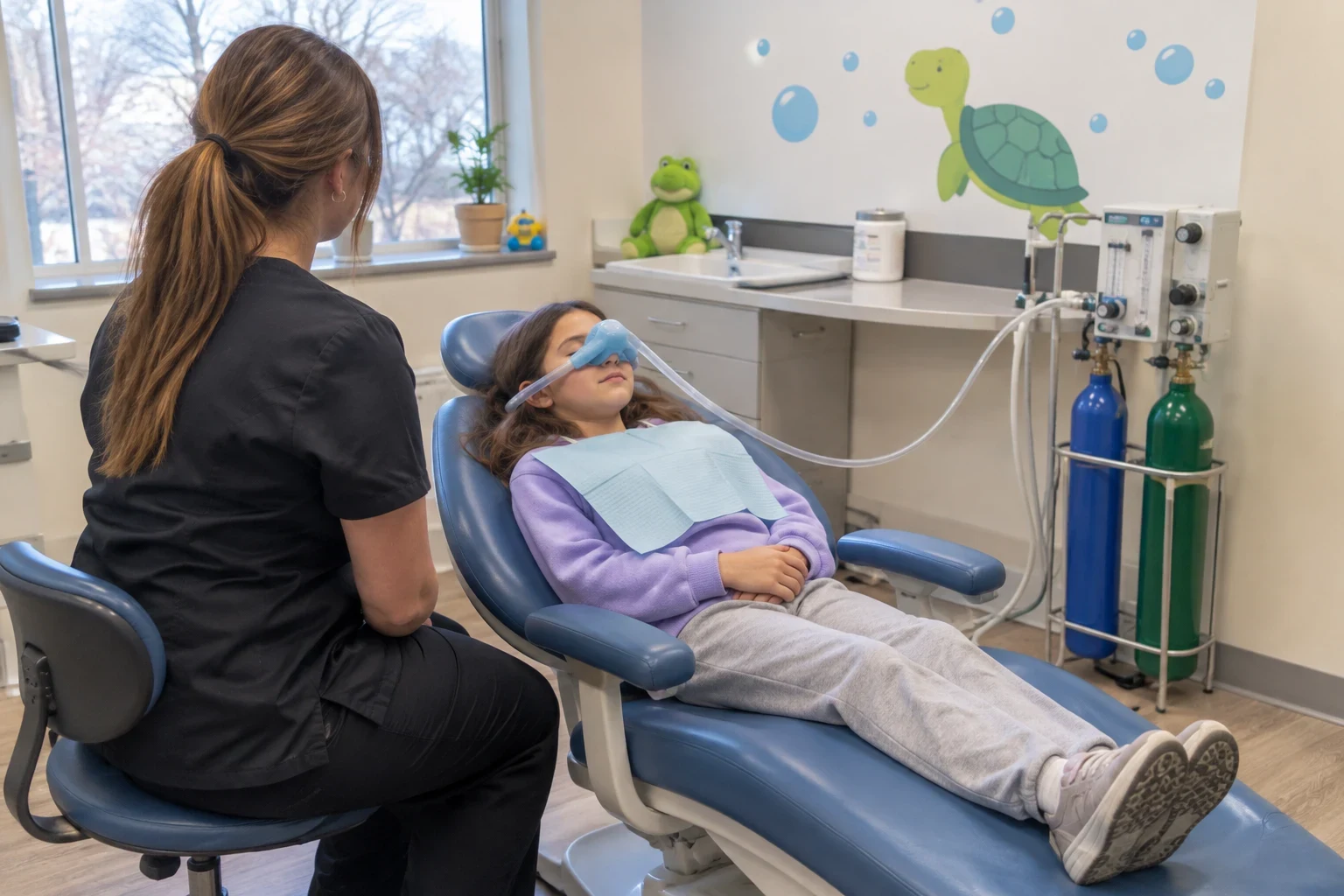
- For many kids, nitrous oxide (laughing gas) through a small nose mask is enough. It takes the edge off and wears off fast. Stronger options are kept for longer or harder cases, and we explain the difference so you can decide.
- Clear written instructions
- You get plain instructions on eating and drinking before the visit, what to bring, and what to watch for after. Following them closely is one of the biggest parts of keeping sedation safe.
- Monitoring the whole time
- Your child is watched from start to finish, including breathing and oxygen levels. Someone stays with your child until they are awake enough to go.
- Recovery and follow-up
- We walk you through the rest of the day: soft foods, rest, and when your child can go back to normal play. If something seems off, you call us.
Signs your child might need sedation
Past visits ended in tears
If your child has panicked, fought the chair, or couldn't open up long enough for us to work, sedation may help them get the care they need without another bad memory.
Several teeth need work
When there are multiple cavities or a crown plus fillings, sedation can let us repair them in one sitting. That's often easier on kids than four or five short visits.
Very young age
Toddlers can't sit still or follow instructions for long. For small kids with real decay, light sedation can keep them safe while we work.
Strong gag reflex
Some kids gag on the mirror alone. Nitrous oxide often calms that reflex enough to finish a cleaning or filling.
Special health or sensory needs
Kids who are sensitive to sound, light, or touch may find the dental chair overwhelming. We talk with you about what has worked for your child in the past and plan around it.
How a sedation visit goes
- 1
Talk first
We start with an exam and a conversation. We look at the teeth, explain what needs repair, and tell you honestly whether sedation is worth it. Sometimes the answer is no.
- 2
Get ready the night ahead
You follow the eating and drinking instructions we gave you. Dress your child in comfy clothes and bring a favorite blanket or toy.
- 3
Settle in and start slow
Your child gets comfortable in the chair. For nitrous oxide, we let them pick a scent and breathe through the mask for a few minutes, then we begin.
- 4
Do the work
Once your child is calm, we numb the area and do the repairs we planned. We check on comfort the whole way through.
- 5
Wake up and go
We keep your child with us until they are alert and steady. Most kids on nitrous oxide feel normal within minutes. Stronger sedation means a quiet afternoon of rest.
What affects the cost of sedation
Cost depends on what kind of sedation your child needs and how long the visit runs. We give you a clear breakdown before we start, so there are no surprises. You can pay with MasterCard, Visa or Discover, we work with most insurance plans, and the CareCredit Patient Payment Plan is an option too.
- Type of sedation
- Nitrous oxide is the lightest and usually the simplest. Stronger options take more prep and monitoring, which changes the cost.
- Length of the visit
- More teeth to repair means more time under sedation. Grouping the work into one visit can sometimes cost less than spreading it out.
- The dental work itself
- Sedation is billed alongside the treatment. A filling, a crown, or an extraction each have their own cost.
- Insurance coverage
- Some plans cover sedation for young kids or certain conditions, and some don't. We help you see what your plan says, but your insurer makes the final call.
Questions parents ask about sedation
Something not covered here? (508) 466-6025
Is sedation safe for kids?
When it is used for the right child, with a careful health review and close monitoring, it has a strong safety record. The biggest risks come from skipping the prep steps, which is why we are strict about the eating and drinking instructions. If something in your child's history worries us, we'll tell you and suggest another plan.
Will my child be asleep?
With nitrous oxide, no. Your child stays awake, can talk to us, and usually feels relaxed and a little giggly. Stronger options make kids drowsy, and we explain exactly what to expect ahead of the visit.
Can I stay in the room?
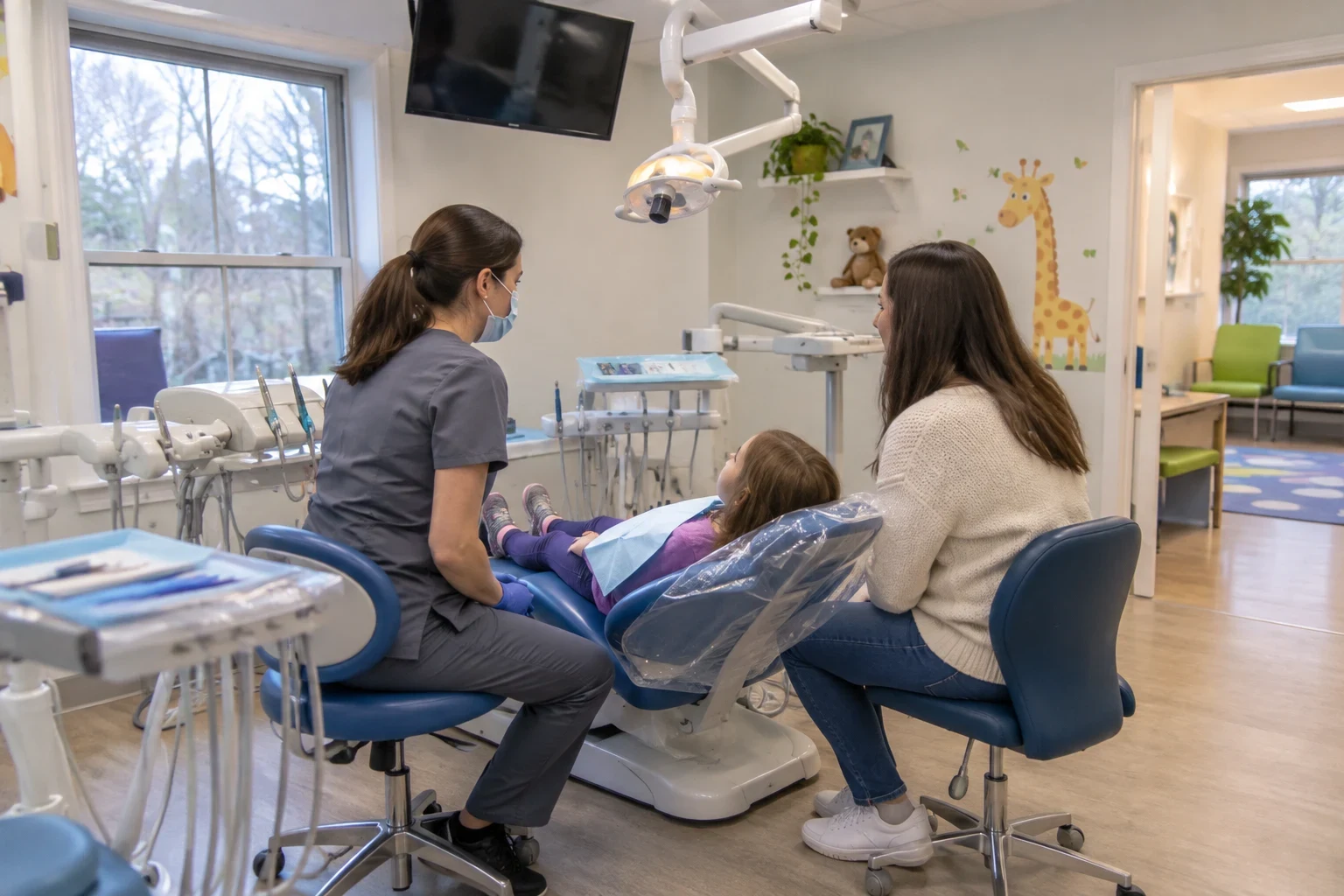
We'll talk about this when we plan the visit. Some kids do better with a parent close by, and some settle faster without one. We'll go with what helps your child stay calm.
Why not just pull the tooth instead?
Baby teeth hold space for adult teeth and help kids chew and speak. If a tooth can be saved with a filling or crown, saving it is usually better. Sedation often makes that repair possible. If the tooth can't be saved, we'll explain why and talk about extractions and space maintainers.
What should my child do after the visit?
After nitrous oxide, most kids can go back to their day. After stronger sedation, plan on rest, soft foods, and an adult nearby for the rest of the day. We send you out with written aftercare notes.
Let's talk about what your child needs
Tell us how past visits have gone and what you're worried about. We'll set up an exam, look at the teeth, and give you a straight answer on whether sedation will help.